

Advertisement

Unlocking Scalable Growth: CI/CD Automation for Ambitious Digital Product Teams
Introduction: The Digital Race—Why Speed and Reliability Matter Scaling a digital product is an inexorable ambition for any forward-thinking startup, scale-up, or enterprise. Yet, growth is only possible when innovation flows unimpeded, product quality remains uncompromised, and teams can focus on what truly matters: creating seamless experiences for their users. In high-stakes markets—where being first can be a critical advantage and reliability is non-negotiable—every deployment, feature release, or bugfix introduces both an opportunity and a risk. This is where Continuous Integration and Continuous Delivery (CI/CD) automation changes the game by blending velocity with quality assurance in software development. At Ify Stores, we partner with driven product and engineering leaders, offering user‑centric digital product design and full‑stack web & mobile app development. Our core value? Building maintainable, performant applications that scale as you do. Today, we’ll uncover a foundational pillar of that promise: CI/CD automation, and why it’s especially transformative for fast-growing tech teams from Seed through Series B and beyond. The Stakes: Challenges Facing High-Growth Product Teams For Founders, CTOs, and Product Heads, the mandate is relentless: increase innovation cycles, reduce time-to-market, and do so without introducing instability or tech debt. However, as tech companies evolve from their first MVP to more mature products, manual code deployments, ad-hoc testing, and inconsistent release processes become bottlenecks—and risks. Pain Points We Consistently See: Launches tied to a single engineer’s tribal knowledge or arcane scripts “Works on my machine” syndrome leading to deployment failures on production High friction in QA cycles, delaying customer-facing releases Inconsistent environments causing bugs that escape detection Stress, overtime, and diminished team morale before every big launch Fast-moving digital product teams deserve better. Modern CI/CD is more than a toolset—it’s a practice and a mindset that automates away the pain, providing agility and confidence. The Foundation: What Is CI/CD Automation, Really? Let’s clarify the fundamentals, avoiding jargon. Continuous Integration (CI) is the process of automatically checking and merging code changes from different contributors into a shared repository, with automated builds and tests validating each change. Continuous Delivery (CD) extends this foundation, automatically packaging, deploying, and verifying the application in testing or production environments—at the push of a button, or even entirely hands-off. Key Elements of CI/CD Automation: Version-controlled build pipelines: Every code commit triggers automated workflows. Automated testing: Unit, integration, UI, and end-to-end tests validate releases—no more manual checklist deployment gates. Consistent deployment environments: From dev to staging to production, environments are provisioned as code, ensuring parity. Instant feedback loops: Teams see test results and deployment statuses in minutes, not hours. Rollback safety nets: If something breaks, reverting is safe and easy. Security gates and compliance checks: Sensitive workflows, such as those in fintech or healthcare, are integrated seamlessly. At Ify Stores, we orchestrate these foundations with robust, transparent toolchains tailored to each client—GitHub Actions, GitLab CI, Bitbucket Pipelines, CircleCI, or custom Kubernetes workflows—adapted to your stack. Value in Action: How CI/CD Elevates Product and Team Performance 1. Acceleration With Confidence For startups racing to release MVPs or v1.0 apps, or for scale-ups pushing weekly (even daily) updates, CI/CD automation is the engine powering your agility. Features can be shipped as soon as they're ready—no “release day stress,” no blocked resources, no bottlenecks. Outcome: Teams rapidly validate ideas with real users. Bugs are caught earlier, not by customers. Experimentation flourishes without chaos. 2. Quality at Scale With automated regression tests and code reviews built into the pipeline, quality is no longer a final-phase gate—it’s a constant. Automated performance tests (Core Web Vitals, Lighthouse, etc.) ensure user experience isn’t sacrificed for speed. Outcome: Fewer production incidents. Higher user trust and improved NPS. QA teams focus on exploratory testing, not repetitive checks. 3. Team Happiness and Growth Modern engineers demand autonomy and clarity. Talent retention hinges on the ability to build, test, and deploy without friction. Mature CI/CD automation attracts great developers, accelerates onboarding, and encourages a culture of experimentation. Outcome: Technical debt is controlled from day one. Knowledge silos are broken: deployment is anyone’s game. Morale soars through repeated “success at scale” stories. 4. Security, Compliance, and Reliability In regulated environments (fintech, healthcare, education), mistakes can mean noncompliance, breaches, or data loss. CI/CD enables automated security scans, credentials management, and audit trails—making compliance effortful but manageable. Outcome: Deployments meet ISO, OWASP, and domain-specific standards. Access controls (RBAC) are enforced throughout the pipeline. Incidents are rare, traceable, and quickly remediated. A CI/CD Automation Tip from Ify Stores: Build Parity Into Your Dev, Staging, and Production Environments The most common and costly issues we see as companies scale center around environment drift—the subtle (or not-so-subtle) differences between development, staging, and production environments. These discrepancies introduce “ghost bugs” that materialize only after launch, or security configurations that aren't consistently enforced. Customers are affected, teams scramble, and release velocity grinds to a halt. Here's How to Fix It: 1. Treat Environments as Code Define your infrastructure (servers, databases, CI runners) in Terraform, Pulumi, or similar tools. Commit these to version control. Use parameterized configurations for secrets, endpoints, and environment variables—but keep the core infrastructure identical. 2. Automate Environment Setup in Pipelines Your CI/CD workflows should provision and seed environments automatically, using the same scripts and tools across dev, staging, and prod. All migrations, seeds, and third-party service integrations should happen via automation, not manual steps. 3. Integrate Environment-Specific Testing Run smoke and integration tests in every environment. Run representative data through staging builds before promoting to production. Ensure performance monitoring and error tracing are attached at every level. 4. Enforce Approval Gates for Sensitive Deployments For critical systems, require code reviews and gate deployments with automated security/compliance scans. Result: Launches become routine—not high-drama events. Bugs and security issues are reduced by an order of magnitude. Developer productivity and stakeholder confidence reach new heights. Ify Stores brings this discipline to every digital product initiative—whether you’re building a greenfield MVP or rejuvenating a mission-critical SaaS platform. Real-World Impact: Success Stories From Ify Stores’ Partners Seed-Stage Startup: Launched a production-ready MVP less than 60 days from discovery, with biweekly feature releases and zero deployment downtime, using automated CI/CD pipelines orchestrated via GitHub Actions and AWS. Scaling SaaS Provider: Reduced release latency from 2 weeks to 2 hours by introducing containerized staging environments and automated browser testing, enabling more competitive iteration in a crowded market. Enterprise Platform: Achieved ISO 27001 compliance for healthcare data processing through locked-down, monitored CI/CD deployments with built-in SAST/DAST security checks on every merge to main. Our process is always collaborative: we empower your in-house teams, share knowledge, and leave you with a battle-proven, maintainable system that evolves as your business grows. Why Now? CI/CD as a Strategic Differentiator In 2026, where every day brings new competitors, regulatory shifts, and rising user expectations, CI/CD is not a “nice-to-have” for digital product teams—it’s table stakes. Automated, reliable delivery is the difference between leading and lagging, both in speed and quality. Leaders investing in CI/CD today will: Outpace competition in releasing secure, stable features Reduce operational costs and firefighting Attract and retain the best technical talent Build a future-proof foundation for whatever’s next Partnering With Ify Stores: Our Agile, Transparent Approach We know that implementing CI/CD isn’t just a technical project—it requires buy-in, culture, and ongoing support. At Ify Stores, we: Start every engagement with a discovery workshop to clarify your pain points, regulatory needs, and business goals. Prototype, configure, and iterate on your CI/CD pipelines collaboratively with your DevOps, product, and QA leaders. Set up robust documentation, training, and handoff, so your team owns the process by the end. Remain available for ongoing lifecycle support, incident response, and roadmap planning—so your investment yields value, month after month. Call-to-Action: Elevate Your Product Delivery Today Are you ready to de-risk your releases, accelerate feature velocity, and build the infrastructure necessary for scalable growth? Reach out to the Ify Stores team to schedule a CI/CD assessment or discovery workshop, and start your journey toward frictionless digital product delivery. What’s Your Biggest CI/CD Challenge? We’d love to hear from you: What’s your top challenge or frustration with release management or deployment automation? How are CI/CD practices shaping your product strategy in 2026? Share your thoughts, questions, or war stories below—we’re building the future of digital products, one release at a time.

Mastering Mobile App Reliability: Patterns for Scalable Digital Products from MVP to Enterprise
Why Mobile App Reliability Matters More Than Ever In a world where digital interactions increasingly fuel our work, our play, and everything in between, mobile apps have become mission-critical touchpoints for tech startups, ambitious scale-ups, and large enterprises alike. Every session, every swipe, and every tap is a moment of truth—an opportunity for an application to either inspire confidence or breed frustration. For the teams behind these apps—from non-technical founders aspiring to launch their first MVP, to mid-market SaaS product leaders, to enterprise organizations shepherding vast user bases—mobile reliability is not a luxury; it is the foundation for trust and growth. At Ify Stores, we believe reliability is engineered, not improvised. It is the result of thoughtful design, rigorous engineering, best practices, and relentless iteration from prototype to version one—and in every update after. In today’s blogpost, we dive deep into Mobile App Reliability Patterns: what they are, why they matter, how they form the backbone of scalable digital products, and how Ify Stores deploys them to help teams like yours build apps users love and depend on. Understanding Mobile App Reliability: The Pillars of Trust Before we explore practical patterns, we must understand what reliability means in the context of mobile applications: Reliability is the quality of consistently delivering expected outcomes—fast, safe, and available—across user devices, locations, and unpredictable network conditions. For digital product teams, reliability manifests as: Smooth onboarding without glitches Functionality that just works, even offline or with spotty connectivity Real-time data that remains current and accurate Graceful recovery from errors or crashes Stable updates and backwards compatibility When reliability falters, so does trust. Users uninstall, leave negative reviews, or—worse—choose a competitor’s product. For Seed to Series B startups, this could mean missing product-market fit. For scale-ups and enterprises, it risks costly churn and loss of brand reputation. Core Patterns for Building Reliable Mobile Apps At Ify Stores, delivering bulletproof reliability rests on a set of field-tested patterns, cultivated through years of launching and scaling real products. Here’s how our approach translates into live, maintainable apps: 1. Offline-First Architecture Mobile users expect your app to “just work”—whether they’re underground on a subway or between cell towers. Building for intermittent connectivity is no longer optional. Our approach includes: Local-first datastores: Persisting critical data locally, then syncing transparently once connectivity resumes Optimistic UI: Updating the interface immediately while background processes confirm server responses Graceful error messaging: Informing users when actions are queued or retried, instead of failing in silence 2. Defensive Error Handling No product is immune to the unexpected: invalid states, server downtime, or misbehaving APIs. For robust reliability, we: Standardize error messages and UI flows for recoverability Implement automatic error reporting for silent crashes Use circuit breakers and retries for transient server/network issues 3. Resilient Data Synchronization Synced data forms the heartbeat of any successful mobile product—especially when users collaborate across devices or platforms. Our patterns include: Time-stamped conflict resolution and version checks Automated background sync services that minimize user disruption Backoff and exponential retry strategies to prevent API overload 4. Automated Testing & Continuous Integration Reliable releases depend on catching issues before they affect users. We set up: End-to-end (E2E) and unit testing across real devices and emulators Automated smoke tests triggered on every commit, merge, or deployment Integration of error trackers and crash analytics for live monitoring post-launch 5. Security-First Operations Reliability without security is a recipe for disaster. Our teams integrate: Secure authentication and authorization (OAuth2, biometrics, RBAC) Encrypted data storage on-device and in-transit Third-party dependency audits to minimize vulnerabilities 6. User-Centric Performance Optimization Performance is reliability’s twin. Sluggish, battery-hungry apps feel just as broken as those that crash. We ensure: Lazy loading and background data fetching for smooth UIs Code splitting and optimization to reduce app size and load times Profiling and real-world UX metrics to catch bottlenecks before users do Case Study: From MVP to Market Leader How do these patterns translate into business results? Consider a typical journey for our clients: Startup (Seed to Series B): A founder comes to Ify Stores with a prototype or raw idea, eager to launch an MVP that proves value for their first investors and early adopters. We prioritize offline readiness, reliable onboarding, and error handling from day one—ensuring their MVP delights users no matter where or when they open the app. Automated tests and crash analytics mean updates are safe, even as the team moves fast. Scale-up (100–500 employees): As the user base grows, new pain emerges: sync errors, service outages, and feature regressions. Ify Stores helps “harden” the product with resilient APIs, scalable cloud infrastructure, and CI/CD automation—transforming reliability from a gamble to a competitive edge. Enterprise product team (API-driven): For enterprises integrating payments, device data, or role-based access, reliability is paramount. We deploy patterns like transactional operations, robust API versioning, and granular monitoring to guarantee uptime and compliance—even at scale. Reliability Patterns in Action: The Ify Stores Way How exactly do we put theory into practice? Our engagements typically start with a discovery workshop—mapping user journeys, surfacing technical requirements, and prototyping critical interactions that must be reliable. Next, through design and architecture sprints, we establish: Structural reliability: Layering offline-first strategies, secure local storage, and scalable backend syncing Testability: Introducing automated tests and CI/CD from the earliest builds, not as an afterthought Health monitoring: Embedding crash reporting and performance metrics into beta releases for fast feedback loops Our process is milestone-driven, with transparent tracking. We work closely with founders, product leaders, and engineering managers—inviting feedback, demoing prototypes, and adapting quickly as requirements evolve. As the digital product matures, we continue to support with ongoing QA, incident response, and performance tuning, ensuring that reliability is not lost to “move fast and break things,” but instead enhanced at every release. Why Investing in Mobile App Reliability Pays Off In a world shaped by volatility—changing devices, shifting networks, evolving user habits—investing systematically in reliability is not just technical due diligence. It is a business strategy: Higher conversion and retention: Reliable onboarding boosts signups, while stable features keep users coming back. Reduced support costs: Fewer crashes and bugs mean happier users and reduced drain on support and engineering teams. Stronger reputation: In crowded app stores, reliability and stability become brand differentiators. Agility with confidence: Automated tests and CI/CD empower teams to ship features faster without fear of regression or downtime. Most of all, reliability unlocks scalability. It transforms apps from fragile prototypes to platforms trusted by investors, partners, and mass-market users alike. Call-to-Action: Ready to Build Real Reliability Into Your App? If reliability and scalability are critical to your web or mobile app—whether you’re launching your MVP, replatforming, or expanding for enterprise growth—Ify Stores can help. We offer a prototype-first, collaborative approach, pairing user-centric design with battle-tested engineering so your product delights users everywhere, every time. Let’s talk about how we can help you make reliability a reality—visit Our Website or reach out for a discovery call today. What reliability challenge is most important for your next mobile/web launch, and how are you planning to address it?

Transforming Ideas into Impact: A UX Law of the Week for Product Leaders and Innovators
Why UX Law Matters When Building Digital Products Every startup, scale-up, and enterprise faces the same fundamental challenge: transforming ambitious ideas into digital products that not only function seamlessly but also captivate users. For forward-thinking companies in fast-moving sectors—whether you’re a Seed-stage team crafting your MVP, an established SaaS platform standardizing your design system, or an enterprise rolling out a new API-driven platform—the difference between good and great often comes down to usability. At Ify Stores, our approach to digital product design and full-stack development goes beyond code and pixels. We align user-centric principles with technical excellence to help you deliver thoughtful, accessible, and high-performance websites and apps. Each week, we spotlight a UX Law—an essential truth about human behavior and interaction design—to inform and inspire product teams. This week, we dive into one of the most powerful UX Laws that can drive business growth: Jakob’s Law. Jakob’s Law: Familiarity Breeds Engagement What Is Jakob’s Law? Jakob’s Law, coined by usability expert Jakob Nielsen, states: "Users spend most of their time on other sites and apps. They prefer your site/app to work the same way as the ones they already know." In digital product design, this principle is foundational. The majority of your users arrive with a mental model shaped by familiar products—platforms they use every day, from Gmail to Slack, from Shopify to Netflix. When your product mimics common patterns of navigation, interaction, and visual cues, users grasp it faster, feel more confident, and are more likely to return. The Psychology Behind Familiarity Users crave intuitive interfaces that minimize cognitive load. Familiar structures, language, and actions enable “system 1 thinking,” letting people reason and act automatically—rather than pausing to interpret a novel interface. This is especially vital for products targeting busy professionals (think CPOs at SaaS scale-ups, marketing leads launching campaigns, or founders pitching with a prototype) who need onboarding to be seamless, not stressful. When a digital product honors users’ prior experiences, you unlock higher satisfaction, faster adoption, and reduced support overhead. Simply put: less confusion means more conversions. Where Startups and Scale-Ups Go Wrong Reinventing the Wheel Tech startups and innovation-driven teams often seek to disrupt user interfaces as much as business models. The temptation to reinvent basic controls, menus, dashboards, or flows is strong—especially in the push for differentiation during MVP or Series A launches. However, departing too sharply from established conventions slows users down and risks alienating those who expect things to “just work.” Even the most brilliant custom interface will struggle if it opposes fundamental habits users already trust elsewhere. Fragmented Experiences Across Web and Mobile For growing companies, the challenge compounds as products diversify. Marketing wants a bold, animated homepage; engineering wants clean APIs and stable auth flows; sales wants friction-free sign-ups. If design decisions ignore core UX Laws like Jakob's, each new feature or touchpoint becomes a silo rather than a seamless journey. The result? Fragmented platforms that underperform—even if technically robust. Fluctuating engagement metrics, high dropoff rates, and negative feedback often trace back not to faulty backend code, but inconsistent design patterns. Applying Jakob’s Law: Ify Stores’ Approach Lean Discovery Meets UX Research At Ify Stores, product engagement starts with open eyes. Our discovery workshops and user journey mapping dig into your audience’s habits, preferences, and prior tool experiences. We validate assumptions with stakeholder interviews, analytics, and direct user feedback before sketching even a single wireframe. From the earliest touchpoint, our team benchmarks your product against the familiar ecosystems your target users already love. Are your SaaS workflows echoing the best practices of industry leaders? Does your mobile interface honor device conventions from iOS and Android? By blending research with empathy, we ensure that what’s “new” in your product never breaks what’s intuitive. Prototyping for Familiarity and Delight Design should never be a shot in the dark. Our interactive prototypes allow users—whether investors, founders, or beta testers—to explore high-fidelity flows early and often. This is where Jakob’s Law guides every iteration: Navigation Patterns: We echo placement, symbols, and wording users see in platforms like Notion, Asana, or Shopify—whether it’s sidebars, modals, or dropdowns—so actions feel second nature. Onboarding and Empty States: First-time experiences draw from winning standards: clear calls-to-action, progress indicators, and just-in-time tips reminiscent of Slack, Trello, and Figma. Form Design: Input fields, error styles, and save/submit flows parallel what works on platforms like Google Workspace, minimizing headaches and boosts conversion. By grounding innovation in recognized patterns, we fuse the new with the familiar—allowing your brand and features to shine where they matter most. Systematic Design: Scaling Consistency Jakob’s Law is also about visual and behavioral unity. Our design-system creation service crafts reusable components and documentation that standardize your product’s look and feel. Whether rolling out a new web dashboard or a mobile feature, your team benefits from consistency across every touchpoint. Component Libraries: We deliver Figma and code libraries for buttons, inputs, notifications, and layouts rooted in widely-accepted design languages. Documentation: Every element includes rationale and best practices to ensure developers don’t introduce unfamiliar or inconsistent UI by accident. The Bottom Line: Business Value Through Applied UX Laws Reduce Friction, Drive Adoption Products that respect user habits require fewer support tickets, convert signups faster, and retain users longer. Whether you’re building an MVP to win investor buy-in or relaunching an enterprise suite, Jakob’s Law ensures your technology doesn’t trip up your business goals. Boost ROI on Every Feature By adopting familiar patterns, product and engineering teams can prototype, validate, and iterate with confidence. This speeds up cycles—especially important for startups under tight timelines—and enables scale-ups and enterprises to launch and refine features with minimal user friction. Build Trust and Credibility An app or website that feels “just right” signals professionalism and builds trust. Enterprise partners, investors, and even first-time users will appreciate the clear, coherent experience—making them more likely to choose, recommend, and invest in your solution. Real-World Wins: Success Stories from Ify Stores Seed-Stage SaaS: Rapid onboarding with dashboard patterns familiar from Slack/Zoom increased trial-to-paid conversions by 23%. Consumer Mobile App: Adopting iOS/Android native navigation conventions cut user dropoff by 35% after launch. Mid-market B2B Platform: Redesigning signup and workflow management with patterns inspired by Asana and Monday.com, support tickets dropped by nearly half. Every step, from wireframe to launch to lifecycle support, is a chance to honor—and capitalize on—what users already know and love. Making Jakob’s Law Work for Your Product Product leaders, founders, and engineering heads: when scoping your next digital project, ask yourself: Which products do your target users interact with every day? Are your core workflows echoing familiar conventions from those platforms? How can your UX/UI create delight while removing friction and confusion? By rooting your digital product in the principles celebrated by Jakob’s Law, you not only boost usability and reduce risk—you actively accelerate growth. Ready to Deliver Better Products, Faster? If you’re planning your MVP, redesigning a SaaS portal, or modernizing an enterprise platform, Ify Stores is here to combine user-centric insight with full-stack prowess. Let’s talk about how UX Laws like Jakob’s can power your next milestone. How do you see familiarity (or unfamiliarity) impacting user engagement in your current products? Share your experiences or challenges below—we’d love to learn from your journey and discuss solutions!

Core Web Vitals: The Hidden Superpower for High-Performance Digital Products
The Stakes for Modern Tech Companies: Why Core Web Vitals Matter More Than Ever Across the tech landscape—from seed-stage startups building their first MVP, to scale-ups engineering feature-rich platforms, to established SaaS enterprises reimagining their product’s UX—competition is fierce and attention spans are measured in milliseconds. Product and marketing leaders know: the performance of your website or app isn’t just a technical metric; it’s often the first impression your brand makes, the conversion catalyst for your business model, and—critically—a direct factor in user satisfaction, retention, and even your ranking on Google. At Ify Stores, we believe optimized performance isn’t a “nice to have”; it’s a foundational product quality. That’s why we intertwine design, engineering, and ongoing QA to deliver visually stunning, lightning-fast, and eminently usable digital products—from accessible marketing sites to API-driven enterprise apps. Today, we shine a spotlight on a transformative approach: mastering Core Web Vitals for superior web experience. What Are Core Web Vitals? Understanding Google’s Performance Standard Core Web Vitals are a set of performance metrics introduced by Google to measure real-world user experience across three essential dimensions: Largest Contentful Paint (LCP): How quickly does the main content render? First Input Delay (FID) / Interaction to Next Paint (INP): How quickly does the page respond to user interactions? Cumulative Layout Shift (CLS): How stable is the visual layout as the page loads? Google’s mission is simple: align technical optimization with actual user experience. These vitals are now not only a gold standard for usability and engagement, but also a critical ranking factor in search results. Whether you’re building a new MVP or optimizing a flagship SaaS platform, ignoring Core Web Vitals can cost you customers and revenue. The Impact: Why Seed to Series B Startups, Scale-Ups, and SaaS Teams Should Care For startups racing to prove product-market fit, Core Web Vitals optimization is often overlooked—but it’s a secret weapon: Seed and Series A Startups: Fierce competition for users and investors means seconds (or milliseconds) can tip engagement and conversion. Scale-Ups (100–500 employees): As product complexity grows, every new feature or integration can drag performance down. Neglecting Core Web Vitals leads to usability issues, support tickets, and churn. Mid-market SaaS Companies: Standardizing and improving performance across a growing suite of features and pages is vital for customer satisfaction and sales. Enterprises: For large product organizations with multiple teams, maintaining high-performance standards at scale—and complying with industry benchmarks—prevents costly technical debt. A poor Core Web Vitals score impacts not just bounce rates and conversion. It erodes trust, annoys power users, and can reduce your organic visibility, causing a direct impact on your business’s bottom line. The Ify Stores Approach: Holistic Performance Engineering for Every Product Stage What distinguishes Ify Stores is our prototype-first, holistic methodology. From the initial workshop and wireframe, we bake Core Web Vitals best practices directly into the way we design, build, and scale: User-Centric UX/UI: We design with a “performance by default” mindset—prioritizing content hierarchy and above-the-fold clarity. Front-End Engineering: Clean, semantic HTML. CSS modularization and critical-path styles. JavaScript split into lightweight components with code-splitting and modern ES6+ best practices. API-Driven, Server-Side Rendering: We implement architectures (Next.js, Nuxt, Remix, etc.) that enable rapid rendering and minimize contentful paint times. Asset Optimization: Automated pipelines ensure images, fonts, and videos are responsibly sized, compressed, and lazy-loaded wherever feasible. Real-World Testing: We instrument performance monitoring from staging to production, validating scores on real devices and throttled networks. CI/CD Automation: Every release checks performance budgets, so no new feature or third-party integration tanks your scores. From MVP launch to ongoing lifecycle support, our engineering and QA teams make Core Web Vitals a non-negotiable quality gate—protecting your brand and your users at every stage of growth. Core Web Vitals Performance Tip: Mastering Largest Contentful Paint Let’s focus on one game-changing metric: Largest Contentful Paint (LCP). This is the time it takes for the largest visual element in the viewport (a hero image, featured video, headline) to render on screen. Slow LCP kills first impressions. What slows LCP? Non-optimized hero images or background media Blocking JavaScript/CSS before content is displayed Slow server response (TTFB) Inefficient resource loading (fonts, analytics scripts) How Ify Stores boosts LCP for our clients: Image and Media Automation: Use next-gen formats (WebP, AVIF) and “srcset” responsive images so only the right size loads per device. Employ content delivery networks (CDNs) with smart caching—especially critical for global startups aiming for multi-region users. Critical-Path CSS and Font Strategy: Inline minimal CSS for above-the-fold content; load the rest asynchronously. Subset and self-host webfonts, preloading them so text appears instantly instead of “flash of invisible text” (FOIT). Efficient Server-Side Rendering: Leverage frameworks with SSR support (Next.js, Nuxt) so content hits the browser as fast HTML, not via slow client JavaScript. Third-Party Script Management: Audit and defer non-critical scripts (analytics, chat, A/B testing) to load after LCP. Performance Budgets in CI/CD: Each pull request triggers automated Lighthouse checks. Any regression in LCP prompts a code review before merge. The Outcome: In projects from MVP landing pages to enterprise dashboards, our clients see LCP times regularly under 1.2 seconds—a huge win for conversion and perception. Common Pitfalls: Where Teams Struggle—And How We Solve It Many teams fall into traps that sabotage Core Web Vitals: Design-Development Disconnect: Beautiful Figma mockups turn into slow, bloated builds unless designers and engineers align on performance constraints from day one. Over-Reliance on Third-Party Templates: Off-the-shelf themes often include unnecessary code and features—Ify Stores always strips back and customizes, optimizing each line. Tracking & Marketing Bloat: Non-tech stakeholders pile in tags and widgets; our CMS workflows and role-based access ensure only approved, performance-friendly elements go live. Legacy Stack Drag: Monolithic back ends or outdated frameworks lead to slow TTFB. We modernize architectures incrementally, targeting the biggest bottlenecks first. Measuring Success: Real-World Results from Ify Stores Clients Here’s how a Core Web Vitals–driven approach transforms businesses: Early-stage Fintech MVP: Cut bounce rate 25%, doubled sign-up conversion after we rebuilt the landing experience for sub-1-second LCP and CLS of 0.02. Scale-Up SaaS Overhaul: Improved organic search (SEO) ranking by 11 spots and reduced support tickets tied to “slow loading” complaints. Enterprise Healthcare Portal: Met strict compliance and accessibility targets while reducing interactive delays, keeping both regulators and users happy. Our commitment: monitoring, tuning, and iterating even after launch. Because digital experiences—and user expectations—are always evolving. Next Steps: Building a Culture of Performance at Your Organization Making Core Web Vitals the backbone of your design and engineering practice doesn’t just deliver momentary gains. It creates a culture of ownership, transparency, and continuous improvement—from roadmap planning to support and incident response. Adopt a prototype-first mindset—test ideas on real users and real devices. Empower both product owners and engineers to use performance budgets as a core design constraint. Use automated testing and monitoring not as a bottleneck, but as a way to speed up release cycles with confidence. Educate non-technical stakeholders on how their requests (e.g., marketing tags) can impact business-critical metrics. When product leaders, designers, and engineers work together on performance from day zero, you don’t just get faster pages; you build brands users love. Ready to Unleash Your Product's Hidden Potential? At Ify Stores, we’ve helped startups, scale-ups, and enterprises launch and scale digital products that don’t just look good—they feel great to use and leave a lasting impression. Want an expert review of your site or app’s Core Web Vitals, or to explore how a performance-first partnership can accelerate your growth? Reach out via https://google.com to schedule a discovery call. Have you made Core Web Vitals a central part of your product development strategy? What’s been your biggest challenge—or win—on the path to faster, more user-friendly digital experiences? Let’s start the conversation.

The Power of User-Centric Product Design: How Ify Stores Translates Vision into High-Impact Digital Experiences
Understanding the Heartbeat of Digital Success: User-Centric Design In today’s rapidly shifting digital landscape, success belongs to the product teams who place user needs at the center of every decision. For founders, product leaders, and marketing teams at startups and scale-ups, as well as for ambitious mid-market SaaS and enterprise organizations, the pressure to craft intuitive, elegant, and performant digital products is immense. And yet, too many projects falter because they leap straight into development without deeply understanding the user. At Ify Stores, we believe that extraordinary digital products emerge from a mindset of user empathy, research-driven discovery, and a relentless focus on real-world needs. As a digital product design and full-stack development agency, we don’t just turn concepts into code—we elevate ideas by fusing thoughtful user experience strategy with robust engineering. In this article, we’ll explore our signature approach to user-centric digital product design and why it is the decisive advantage for tech teams intent on building accessible, scalable, and maintainable web and mobile solutions. Why User-Centric Product Design is No Longer Optional The digital marketplace doesn’t reward teams that guess what users want. In the age of consumer savviness and digital abundance, even technically sound products can fail if they’re confusing, inconsistent, or frustrating to engage with. Startups racing to launch an MVP, scale-ups chasing the next leap in usability, and enterprises integrating complex platforms—all face a stark reality: users expect seamlessness, accessibility, and purpose. User-centric product design answers this challenge on every front. It means: Empathizing with real users to unearth sharp pain points and overlooked opportunities Mapping journeys and behaviors to visualize every step, gap, and moment of delight or friction Translating insights into wireframes, prototypes, and design systems that clarify, test, and validate the vision before a single line of production code is written Teams who bake user-centered design into the lifecycle consistently outpace their competitors. They de-risk launches, delight customers, and build solutions that scale with clarity rather than compounding confusion. Ify Stores’ Holistic Approach: Where Discovery Meets Excellence At Ify Stores, user-centric product design forms the backbone of every engagement, no matter the client’s maturity or product complexity. Our process has been honed through years of partnering with forward-thinking startups, high-velocity scale-ups, and enterprise teams with transformative ambitions. 1. Discovery Workshops: Unlocking the Why Behind the What The journey begins not with specs and features, but with conversation. Through structured discovery workshops, we work alongside founders, product managers, UX and marketing teams to: Define product goals and uncover the “jobs to be done” Map stakeholder needs including those of non-technical founders or business executives Identify core user personas and their emotional trigger points Prioritize which features matter for the MVP or 1.0 iteration Clarity at this stage saves countless hours (and dollars) in future sprints. It aligns everyone on the true north: not just shipping software, but solving real user problems. 2. User Research and Journey Mapping: Data-Driven Empathy Next, our team dives into the foundation of all effective UX—listening to the user. This may include: Stakeholder interviews and customer surveys Observing behaviors through analytics or usability tests Creating journey maps to visualize end-to-end experiences (and pain points) The insights we capture lead to thoughtfully prioritized feature sets and actionable opportunities for differentiation. 3. Designing for Accessibility, Consistency, and Delight From these foundations, our UX and UI designers develop: Wireframes and interactive prototypes to test ideas quickly and collect feedback with minimal risk Visual design systems—atomic component libraries that ensure every screen is consistent, accessible, and brand-aligned High-fidelity UIs that are not only visually striking, but crafted for usability, legibility, and fast loading across devices Our design outputs aren’t just beautiful—they’re battle-tested for accessibility (meeting WCAG standards), responsive on every platform, and ready for handoff to front-end engineers. 4. From Prototype to Production: Bridging Design and Engineering Unlike agencies that stop at design, Ify Stores turns prototypes into real, performant products: Front-end engineering: We develop standards-based, semantic, and accessible interfaces, optimized for speed and SEO. API-driven back-ends and integration: Scalable architectures mean easy growth, fast iteration, and seamless connections to authentication (OAuth, RBAC), payments, or third-party platforms. Automated testing and CI/CD: Every user interaction is covered—from rapid builds to rigorous code reviews and dependable releases. Ongoing support: Our commitment doesn’t end at launch. We provide monitoring, incident response, performance tuning, and continuous improvement. This full-stack approach minimizes decision bottlenecks, prevents design/engineering misalignment, and gets our clients to market faster—without compromising on reliability or vision. Spotlight: UX Law of the Week—Start With Users, Not Features To bring theory to life, let’s focus on a foundational principle we champion at Ify Stores—Jakob’s Law: Jakob’s Law states: “Users spend most of their time on other sites. This means that users prefer your site to work the same way as all the other sites they already know.” Why is this so vital for our clients—startups, SaaS providers, and enterprises alike? Reduces cognitive load: Familiar patterns give users confidence. They don’t want to relearn how to use each new product. Accelerates adoption: With less friction, more users make it past onboarding and into meaningful engagement. Informs design decisions: Instead of “reinventing the wheel,” our designers use battle-tested conventions for navigation, authentication, or checkout. Frees resources for true innovation: When the basics are intuitive, teams can channel resources into features that drive differentiation. At Ify Stores, we employ Jakob’s Law during every prototype, wireframe, and interactive test. We benchmark our flows not only against competitors, but also against industry standards users encounter daily—so every experience just makes sense. The Ify Stores Advantage: A True Partner in Product Excellence Building a successful digital product is about more than technical prowess. It’s about cultivating trust—with your own team, with your users, and with a technology partner invested in your long-term growth. Ify Stores isn’t satisfied with “good enough.” Our collaboration model prioritizes: Milestone-driven sprints for visible, measurable progress Prototype-first validation to minimize risk before development investment Transparent communication and stakeholder inclusion (from first workshop to handoff and iteration) Committed lifecycle partnership: testing, CI/CD, monitoring, and post-launch evolution Our motto is simple: We turn empathy, design craft, and robust engineering into digital outcomes that win hearts and market share. Closing Thoughts: Your Vision, Amplified by User-Centric Design Whether you’re architecting the next SaaS powerhouse, overhauling a legacy enterprise platform, or building a bold MVP as a non-technical founder, your user’s needs are the compass guiding every step. Now is the time to embrace a partner who combines the rigor of research, the artistry of UX/UI, and the reliability of full-stack delivery—all united by empathy and technical excellence. Ready to bring your digital vision to life through user-centered product design? Connect with Ify Stores today to schedule your discovery workshop or product review. What’s the greatest barrier you face in aligning product strategy with user needs—and how could an outside perspective unlock your next leap forward?

Unlocking Web Performance: Core Web Vitals Tips for High-Growth Startups and Ambitious Product Teams
Introduction: Why Web Performance Is the First Impression That Lasts In the digital product world, speed isn’t just a feature—it’s a core value. For tech startups in the critical Seed to Series B phases, SaaS innovators standardizing experience, or scale-ups aiming for market dominance, a high-performing website is your best growth engine. What separates a “good enough” site from one that delights users and impresses investors? It’s not just how your site looks, but how it feels—swift, seamless, and always ready. Core Web Vitals, Google’s essential metrics for user-centric performance, have become a North Star for digital product success. Whether you're a founder, product leader, or tech stakeholder in a high-velocity team, mastering these metrics is non-negotiable for user engagement and business outcomes. At Ify Stores, we don’t just build beautiful websites—we architect them for real-world speed and impact. This article delivers the actionable insights your product team needs, shaped by our experience designing and engineering accessible, high-performance digital products at scale. Understanding Core Web Vitals: Your Startup’s Digital Pulse Check What Are Core Web Vitals? Core Web Vitals are a set of field-tested metrics introduced by Google to measure and improve user experience on the web. They focus on three pivotal aspects: Largest Contentful Paint (LCP): How fast does the main visible content load? First Input Delay (FID): How quickly does your site become interactive? Cumulative Layout Shift (CLS): Does anything unexpectedly jump or shift as your site loads? These aren’t just technical targets—they’re direct signals of trust, professionalism, and care for every visitor, talent candidate, or investor who lands on your site. Why Are They Business Critical? Research shows a faster, stable site leads to better engagement, higher conversions, and lower bounce rates. For high-growth startups and mid-market SaaS companies, strong Core Web Vitals influence your SEO, increase app-store readiness, and can be the deciding factor in landing that next demo or closing a funding round. Diagnosing Performance Bottlenecks: A Reality Check for Growth Teams The Startup Challenge Early-stage teams often face time and budget constraints, pushing shortcuts and off-the-shelf tools. While these help ship MVPs quickly, performance debt accumulates. Bloated JavaScript, unoptimized images, excessive third-party scripts—these silent killers of user experience often lurk undetected behind slick homepages. Pinpointing the Issues LCP barriers: Oversized hero images, slow server responses, non-critical resources blocking rendering. FID traps: Heavy JavaScript bundles, inefficient event handlers, poorly prioritized scripts. CLS culprits: Images without explicit size, font swaps, ads injected dynamically, layout shifts from late-loading content. If you’re not actively monitoring these, you’re gambling with your product’s growth, user joy, and bottom line. Actionable Core Web Vitals Performance Tips from Ify Stores Tip #1: Optimize Image Strategy for Instant LCP Gains Images typically make up the heaviest part of a web page—and LCP measures how quickly your most significant content appears. Use modern formats like WebP or AVIF for sharp visuals with lower file sizes. Set exact width and height attributes to prevent layout shifts (boosting CLS alongside LCP). Lazy-load off-screen images, but never the primary hero image. Serve responsive images with srcset to match device requirements. When launching an MVP or iterating on your product page, use tools like Lighthouse or WebPageTest to spotlight LCP offenders and rework critical assets. Tip #2: Script Smarter to Minimize First Input Delay SaaS and enterprise dashboards grow with JavaScript, but too much of it can cripple your FID score and frustrate users. Prioritize only essential scripts for initial load. Break up long tasks in your JavaScript (look for tasks exceeding 50ms). Use web workers to offload heavy computations. Minimize third-party scripts—especially marketing trackers that block interactivity. Defer or async load non-critical JS, especially analytics or chat widgets. Ify Stores’ front-end specialists champion modern tooling and rigorous code review to keep JavaScript lean on every project. Tip #3: Eliminate Cumulative Layout Shift Surprises Nothing erodes trust like content that jumps just as a user clicks. CLS issues are most often caused by elements loading without pre-defined size. Always include width and height for images, videos, and embeds. Reserve space for dynamic ads and popups. Choose fonts with font-display: swap to prevent invisible text from shifting layouts. Avoid inserting content above already rendered content (watch for dynamic banners or error messages). Using automated Lighthouse audits with every release helps Ify Stores maintain pixel-perfect consistency at every scale. Performance-Driven Development: Integrating Core Web Vitals in CI/CD Make Performance Testing Part of the Workflow Integrate Lighthouse or Web Vitals auditing into your pull request and deployment pipelines. Set performance budgets in CI/CD—fail builds if key metrics regress. Monitor real-user data with tools like Google Search Console, Datadog RUM, or Sentry Performance. By embedding performance gates in automation, startups and established product teams alike can catch regressions before they hit users—an essential practice for sustainable scaling. Prototyping for Performance At Ify Stores, every engagement starts prototype-first. Performance insights inform not just engineering, but design decisions—choosing UI structures, component hierarchies, and animation patterns that are fast by default. Discovery workshops and user-journey mapping reveal which pages and flows matter most to your business—so we optimize where impact is highest, from landing pages to growth funnels and signup forms. Accessibility and Performance: Twin Goals, Single Strategy Building accessible sites doesn’t mean sacrificing speed; in fact, focusing on cleanliness and simplicity benefits both. Semantic HTML, proper landmarks, and ARIA roles speed up rendering and assistive technologies. A fast, stable layout ensures screen readers and keyboard navigation aren’t disrupted by late-loading content. WCAG compliance and Core Web Vitals are both baked into Ify Stores’ QA and code review—ensuring your digital products serve everyone, faster. Case Studies: Scaling Web Performance from MVP to Enterprise From Startup to Scale: A Real-World Transformation A Series A SaaS client approached Ify Stores for a complete user journey overhaul. Their signup funnel was plagued by slow initial loads and frustrating layout glitches—directly impacting trial conversions. Our holistic audit revealed heavy hero images, duplicate third-party integrations, and dynamic banners causing CLS. We consolidated tracker scripts, introduced responsive images with srcset, and refactored UI to reserve ad space from initial render. Within weeks, LCP dropped from 4.8s to under 2s and CLS from 0.24 to 0.01. The conversion rate increased by 22%. For another seed-stage mobile-focused team, eliminating a blocking marketing widget improved FID by 40%—translating to higher engagement and improved app store ratings. Maintaining High Performance: Ongoing Monitoring and Tuning Core Web Vitals aren’t set-and-forget metrics. Continuous evolution—new features, A/B tests, third-party integrations—require vigilant monitoring. Establish regular performance audits at every sprint. Set up real-user monitoring (RUM) to catch live regressions. Collaborate with product and marketing to assess the real impact of new tools before launch. At Ify Stores, we commit to lifecycle support—from incident response to future-proofing for browser updates or platform changes—ensuring your site and apps remain a step ahead. Conclusion: Make Performance a Competitive Advantage Today’s digital landscape rewards agile teams who treat performance and user experience as strategic pillars. By embracing Core Web Vitals as part of your product DNA—from MVP sketchboards to enterprise product launches—you create faster, more resilient, and more competitive products that are loved by users and search engines alike. Investing in structured performance improvement is a lever for business growth—not just technical debt reduction. If you’re ready to level up your product’s impact, Ify Stores can help you diagnose, prioritize, and implement best-in-class performance strategies tailored to your journey. Ready to Accelerate Your Product? How does your team integrate performance into your development workflow? Share your biggest bottleneck—or reach out today to discover how Ify Stores’ prototype-first, performance-driven approach can power your next phase of growth. Let’s build something extraordinary together!

Unlocking Seamless Digital Products: The Power of User-Centric Product Design in Modern App Development
Introduction: Designing for Tomorrow's Visionaries In the dynamic landscape of digital product development, ideas alone are not enough. Transforming a concept into a market-ready, scalable, and engaging product requires more than mere code—it demands an empathetic approach, relentless attention to user experience, and technical excellence woven together from the very first sketch to the launch of a feature-rich application. At Ify Stores, we believe that user-centric digital product design, paired with full-stack web and mobile app development, is the secret weapon for startups and scaling tech organizations to make their mark. With the calendar turning to January 3, 2026, just after the inspiring reset of New Year’s, we’re reminded that progress is built on strong foundations—of ideas, of teams, and, most importantly, of exceptional products that truly serve their users. Let us dive deep today into one of our core services and share actionable expertise through our chosen lens: UX Law of the Week—the building blocks that shape user-centric design for scalable, successful apps and websites. Understanding User-Centric Product Design in the Digital Age User-centric product design isn’t a buzzword—it’s a commitment to building digital experiences from the ground up with a relentless focus on the real needs, behaviors, and goals of the people who will use your product. At Ify Stores, our approach means combining rigorous UX research, thoughtful product discovery workshops, and deep stakeholder collaboration to ensure that every pixel and feature aligns with genuine business value and user delight. But what does this look like in practice? Discovery Workshops: We start by clarifying requirements, mapping user journeys, and surfacing often-overlooked pain points. UX Research: We gather real user feedback and synthesize insights to create an information architecture that makes sense. Prototyping & Validation: We test ideas early with interactive prototypes, reducing risk before heavy lifting begins. Iterative Design & Delivery: We build on stakeholder feedback and metrics to pivot and perfect—embracing agile at every step. This holistic, user-first mindset empowers startups and growing companies to avoid common pitfalls of technology-led development and instead focus on crafting effortless, competitive digital products that win loyal fans and scale with confidence. UX Law of the Week: Hick’s Law—Why Less Is More in Digital Product Design When crafting the UX for web or mobile products, few psychological principles are as transformative as Hick’s Law. Simply put, Hick’s Law states: The time it takes for a user to make a decision increases with the number and complexity of choices. Imagine the first launch of an MVP product. Faced with tight deadlines and ambitious roadmaps, teams often fall into the trap of “more features equals more value.” But the truth is: overwhelming users with too many options or cluttered interfaces erodes engagement and, ultimately, business outcomes. Applying Hick’s Law at Ify Stores At Ify Stores, Hick’s Law isn’t just a theoretical tool—we embed it into every phase of design and engineering. Here’s how this UX law directly benefits our clients and their users: Simplified Navigation: We ruthlessly prioritize primary actions over secondary ones, ensuring that the most vital tasks are immediately accessible. Streamlined Onboarding: For mobile apps, onboarding flows are reduced to the essentials, easing users from zero to value in as few steps as possible. Feature Roadmapping: Especially for seed to Series B startups, we champion the “less but better” philosophy—MVPs ship with the most impactful features, allowing real-world usage to inform healthy, focused growth. This isn’t just theory—it’s practice, reflected in intuitive dashboards for SaaS scale-ups, smooth checkout flows for B2C marketplaces, and frictionless interactions for critical mobile-first platforms. Case Study: Hick’s Law in Action—How Startups and Scale-Ups Thrive One recent example lies at the heart of a Series A fintech client who approached us at Ify Stores to design and launch their first consumer-facing mobile app. The challenge: deliver an onboarding process that built instant trust while guiding users through complex financial options—without overwhelming them. The Process Research & Mapping: We mapped out every onboarding step users could face. Many options were trimmed or grouped to reduce cognitive load. Wireframing with Hick’s Law: We presented two clear paths (“Get Started” or “Learn More”) and eliminated all secondary links until users completed initial setup. Prototype Testing: User testing revealed a dramatic reduction in drop-off rates—users found it easier to focus and complete onboarding. Iteration & Delivery: The final app shipped with a three-step onboarding. Additional features (investment options, transaction history) only appeared once the user’s account was active. The Outcome Conversion Rates Up 28%: Fewer users abandoned signup. Support Requests Down 42%: Fewer users needed assistance. Faster MVP Launch: The product shipped ahead of schedule, letting the team gather actionable feedback for future releases. This is the power of user-centric design, illuminated by the guiding light of proven UX principles. Building Your Next MVP with Ify Stores: A Prototype-First, Collaborative Journey For startups racing from seed to Series B or scale-ups leveling up their product experience, the path from vision to first launch can make or break your momentum. At Ify Stores, we harness Hick’s Law and other foundational UX laws to remove complexity, surface core value, and create digital products that succeed—fast. Our Approach at a Glance Stakeholder Alignment: No more guessing games—every milestone is transparent, every requirement captured. Rapid Prototyping: We present clickable prototypes early, enabling you to test concepts with real users before code is written. Iterative Feedback Loops: Weekly reviews and agile sprints mean you see your product evolve in lockstep with evolving needs. Robust Engineering: Our front-end and back-end experts build resilient, secure platforms ready to scale from day one. Continuous Support: From launch to version 10, we’re by your side with monitoring, incident response, and roadmap management. Mistakes to Avoid: When Ignoring UX Laws Holds You Back It’s tempting to sideline UX principles under pressure to deliver quickly, add features, or incorporate executive “must-haves.” But here’s what happens when Hick’s Law and user-centricity are ignored: Cluttered Interfaces: Users freeze, confused by twenty options where five would suffice. Long Decision Times: Critical actions—like making a purchase, booking a demo, or completing onboarding—decelerate. Rising Churn Rates: Frustrated users exit before they discover your product’s true value. Higher Development Costs: Unused features waste time and resources while increasing tech debt. Remember, simplicity scales, complexity fails—especially for young tech companies and ambitious product teams. Getting Started: Transforming Your Product with Ify Stores Is your team planning the leap from prototype to MVP? Needing to overhaul stale UX or accelerate feature delivery while keeping codebase quality high? Ify Stores is your trusted partner, blending design thinking with full-stack excellence. We don’t just deliver code—we champion the business impact of thoughtful design and evidence-driven prioritization, ensuring every release moves your metrics in the right direction. Whether you’re a non-technical founder searching for validation before raising funds, a CPO needing to augment your agile squads, or a marketing lead seeking a high-performance CMS-driven website, we help you cut through the noise and deliver real value to your users. Explore our case studies, review our agile process, or schedule a discovery call at Ify Stores and see user-centric product design in action. Call to Action: Let’s Build Your Next Breakthrough Ready to transform your digital product vision into reality? The first step is understanding the human side of design—because even the most advanced features mean little if users are lost or overwhelmed. Join us at Ify Stores as we put UX laws and full-stack engineering to work for your business, forging products that are simple, scalable, and set for success. How could embracing proven UX principles like Hick’s Law improve your product’s conversion, engagement, or growth? Let us know your most pressing challenges in the comments below—we’d love to start a conversation!

Core Web Vitals Matter: Elevating Your MVP or 1.0 with Ify Stores’ Web Performance Secrets
Building for the Future: Why Performance Defines Product Success The journey from idea to impactful digital product is fraught with crucial decisions. For Seed to Series B tech startups, launching an MVP or the first major release often means balancing tight timelines, uncertain requirements, and ever-higher expectations from users and investors. In this crucible, one often-overlooked differentiator consistently separates products that soar from those that sputter: exceptional web performance. At Ify Stores, we’ve witnessed firsthand how Core Web Vitals—Google’s benchmark metrics for loading, interactivity, and visual stability—directly influence user retention, engagement, and even the fundraising journey. Today, we’re sharing the actionable strategies and mindset behind our performance-first approach for digital product design and full-stack development. If your team is gearing up for a critical MVP or v1.0 web/mobile launch, read on to discover why mastering Core Web Vitals isn’t optional—it’s essential. What Are Core Web Vitals? Setting the Standard for Modern UX Core Web Vitals are a set of performance metrics defined by Google to represent the real-world user experience when loading and interacting with a website. The primary metrics include: Largest Contentful Paint (LCP): How quickly the main content loads (should be under 2.5 seconds). First Input Delay (FID): How quickly a user can interact after loading (should be under 100 milliseconds). Cumulative Layout Shift (CLS): Ensuring visual stability, so content doesn't jump as it appears (should be below 0.1). For ambitious startups moving from zero to one, these aren’t just technical niceties—they directly shape perception, conversion, and growth. Poor scores hurt not only user satisfaction but also SEO and discoverability, reducing the product’s market impact at precisely the moment when impressions matter most. Why Prioritize Web Performance from Day One? First Impressions Last A split second can determine whether users stay or bolt. Startups pouring energy into polished features or viral marketing campaigns can see ROI dissipate if their app stutters or hangs at launch. In early-stage MVPs, every visitor can be a potential champion or critic: a slow site often means a lost opportunity. Investor and Stakeholder Perceptions Seed and Series A investors routinely assess product quality while evaluating scalability. Performance benchmarks like Core Web Vitals are increasingly cited in due diligence. A product that feels robust, fast, and stable signals technical competence and readiness to scale—qualities that unlock the next round. SEO and Organic Growth Every millisecond shaved off page load time boosts search visibility. Core Web Vitals are now significant SEO ranking factors. That means early investments in performance can drive more organic traffic, lower acquisition costs, and solidify market position before budgets balloon. Ify Stores’ Approach: Performance by Design, Not Afterthought Ify Stores has helped dozens of startups translate vision into high-performing products. Our workflow doesn’t just add performance as a box to check at the end; we bake it into every phase—product discovery, UX/UI design, development, and QA. Our approach is rooted in three principles: User-Centric Design: We map critical journeys and design for meaningful, fast interactions—not just aesthetic appeal. Iterative Prototyping: Early, interactive prototypes let us test performance bottlenecks before they become entrenched in the codebase. Full-Stack Engineering Excellence: From modular front-ends to scalable API-driven backends and optimized cloud hosting, we build for speed and maintainability. Let’s unpack our top Core Web Vitals performance tips for startups launching MVPs and 1.0 products. Core Web Vitals Performance Tips from Ify Stores 1. Prioritize Content-Driven LCP Most MVPs and new products have one or two “hero moments”—the piece of content users come to interact with immediately. Optimize everything to make this element visible as soon as possible. How we deliver: Lazy-load images and only load the assets needed for above-the-fold content first. Use modern image formats like WebP for hero sections. Minimize server response times with edge CDN caching. Avoid bloated third-party scripts and heavy client-side libraries. 2. Defeat First Input Delay with Lean Code and Smart APIs Interactive responsiveness matters the moment the user tries to sign up, click a button, or use a form. Slow JavaScript is the biggest FID killer. How we deliver: Bundle JavaScript thoughtfully—code-split only what the current page needs. Defer non-essential scripts until after user interaction. Streamline API design so user-triggered requests feel instant. Instrument user flows to benchmark/monitor FID in production. 3. Keep Layouts Stable to Eliminate CLS Nothing demolishes trust faster than buttons or images that jump just as you reach for them. Layout shifts are common in MVPs trying to patch in features quickly—but CLS issues can be avoided with discipline. How we deliver: Always set explicit width/height on images and embeds. Reserve space in layout for ads, banners, or dynamic components. Avoid content injection without transitions. Use well-defined, reusable design system components to ensure layouts don’t drift as features scale. 4. Automate Performance Testing in CI/CD Manual checks won’t catch regressions in fast-paced MVP cycles. We set up automated performance audits using Lighthouse and Web Vitals tooling as part of CI/CD pipelines, so every deployment is benchmarked for LCP, FID, and CLS. Benefits: Instant feedback on every pull request keeps the team accountable for performance. Prevents “performance drift” as new features are shipped. Helps spot problematic third-party scripts or regressions before they reach users. 5. Optimize Hosting, Caching, and Delivery Your architecture is only as fast as its slowest point. MVPs often run into trouble when launch traffic exceeds expectations. How we deliver: Global CDNs and asset pipelines ensure every visitor gets the closest, fastest content. HTTP/2 and server push for lucky race conditions on primary files. Smart edge caching for dynamic content (think Fastly/Cloudflare workers). Cloud-native scaling so success doesn’t break the site. Real World Impact: Case Studies in Rapid, Reliable MVPs We recently worked with a fintech startup preparing their MVP for a major accelerator demo. By implementing image lazy-loading, critical CSS inlining, and API code-splitting, we halved their LCP and brought their CLS close to zero—all in a two-week sprint. Response from early users and investors: overwhelmingly positive, with praise for a “surprisingly polished, fast-loading experience.” For another SaaS client hitting Series A, our CI/CD pipeline flagged a sudden FID spike after integrating a marketing analytics suite. By catching the regression before launch, we preserved an 18% higher conversion rate versus a “fix it later” approach. Core Web Vitals: A Startup’s Competitive Edge Optimizing for Core Web Vitals isn’t about chasing arbitrary numbers—it’s about embedding quality, mindfulness, and ambition into the DNA of your product from day one. At Ify Stores, we believe performance is a feature, not a finish line. For the next wave of breakout startups, it could make the difference between fleeting attention and exponential growth. Ready to Accelerate Your Product Launch? If your startup is on the cusp of launching its first web or mobile experience, or if you’re looking to level up your product’s reliability and perception, get in touch with Ify Stores today. Our team’s blend of user-centric design, engineering rigor, and performance obsession can help you create the kind of digital product that wins users—and investors—on impact, not just promise. Visit Ify Stores to book a discovery call, or let’s start a conversation about making your MVP as fast, stable, and scalable as your ambition. How are you currently tracking and improving your product’s web performance—and what painful bottlenecks would you most like to solve before your next big launch? Share your story or questions below!
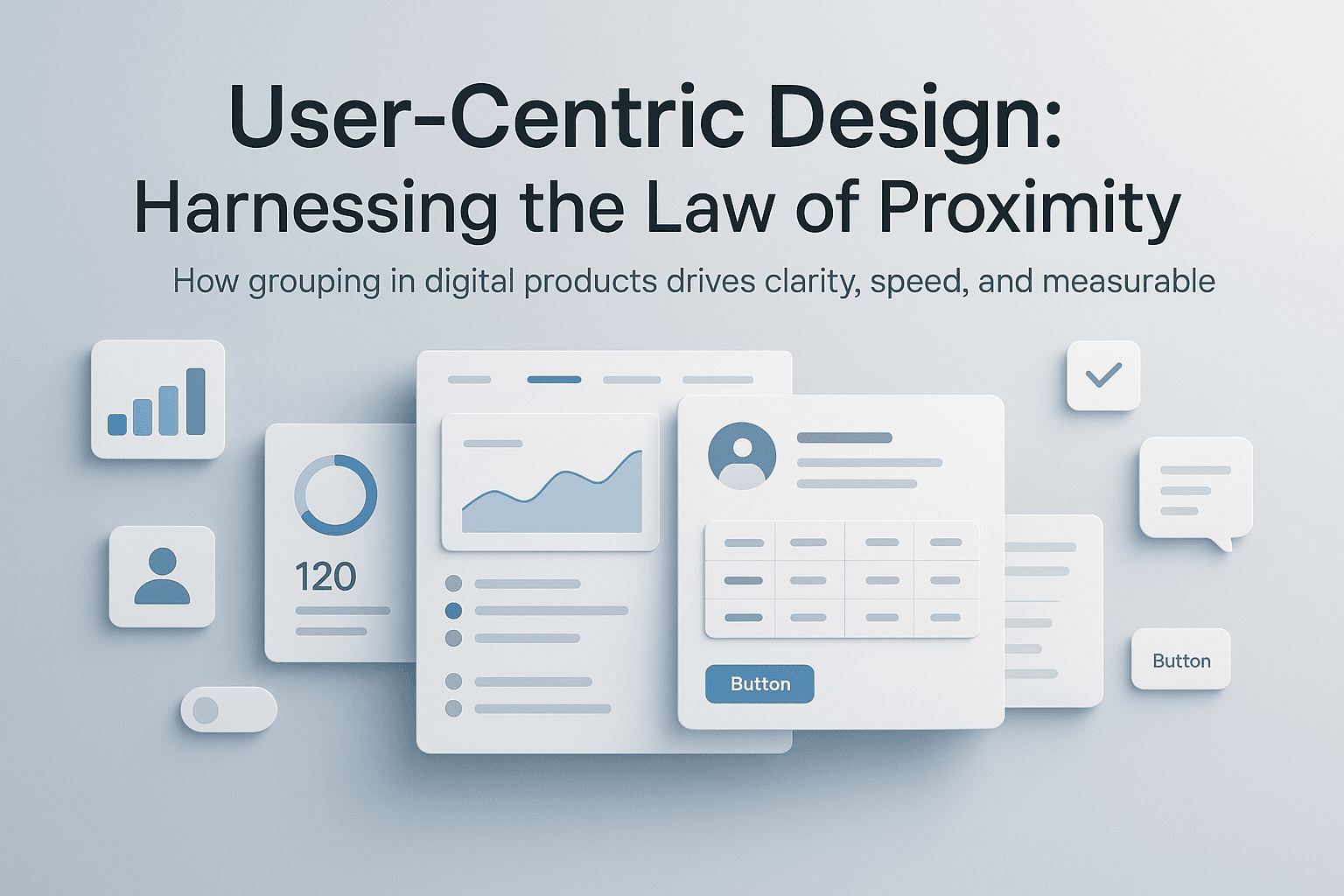
UX Law of the Week: The Power of User-Centric Design in Building Better Digital Products
Introduction: Why User Experience Laws Matter More Than Ever In today’s rapidly evolving technological landscape, digital products are only as strong as the experience they offer their users. For ambitious startups racing from Seed to Series B, hyper-growth scale-ups navigating the demands of hundreds of employees, and established enterprises transforming legacy systems, a laser focus on user experience is not a luxury—it’s an absolute necessity. At Ify Stores, we believe that embedding the fundamental UX laws into product strategy and development lays the foundation for digital solutions that resonate with real users, deliver measurable results, and scale effortlessly. In this installment of our "UX Law of the Week" series, we explore a timeless principle that underpins exceptional digital product design: the Law of Proximity. Harnessing this law during the design and engineering process—which we champion at every engagement—can be the difference between products that simply function and those that truly thrive. Understanding the Law of Proximity The Law of Proximity, rooted in Gestalt psychology, states that elements placed close together are perceived as related or grouped—while elements spaced farther apart appear distinct and separate. When applied to digital product design, this law shapes everything from navigation menus and dashboard layouts to mobile app settings and e-commerce catalogs. Why is this relevant for tech innovators? Because every screen, feature, and workflow you create must align with how actual users perceive and process information. The easier it is for users to intuitively understand groupings and relationships, the less cognitive effort they expend—and the more likely they are to achieve their goals efficiently. Discovery in Action: Proximity in the Ify Stores Design Process At Ify Stores, every project begins with collaborative discovery workshops, in-depth requirements clarification, and hands-on user journey mapping. This isn’t just checkbox activity: it’s our way of ensuring that the Law of Proximity and other core UX principles guide product decisions from day one. For a recent SaaS platform client, we observed early users struggling to differentiate settings for account management from those linked to financial reporting. By applying the Law of Proximity, we designed a clean, modular sidebar that visually grouped these functions. The result? A 40% decrease in support queries around account settings and a measurable uptick in user task completion rates. This simple yet powerful application of proximity ensured our information architecture worked with the brain—not against it. Prototyping and Testing: Rapid Validation with Real Users A design is only as good as its usability in the hands of your audience. That’s why we use interactive prototyping and rigorous UX testing to validate our assumptions. During these prototype phases, we observe how users interact with clustered content versus dispersed elements. Does the grouping align with user expectations? Does proximity highlight relationships or create accidental confusion? Our agile, prototype-first process relies heavily on fast iteration. This approach not only saves significant development effort but also ensures that your MVP or v1.0 reflects genuine user needs—streamlining the journey from product ideation to market launch. From Wireframes to Design Systems: Consistency at Scale When your tech company grows—from a single-product startup to a feature-rich SaaS scale-up or enterprise platform—maintaining design consistency becomes critical. Here, the Law of Proximity comes into play as a blueprint for scalable design systems. Our team crafts reusable, standards-based components in Figma and Storybook, with clear grouping rules that engineers can implement confidently in React, Vue, or native mobile frameworks. Each component—whether it’s a button cluster, card set, or form field group—follows the same proximity logic, ensuring that new features fit seamlessly with the existing product. This not only accelerates development velocity with proven UI patterns but also reinforces visual and functional coherence for every user, no matter the device or screen size. The Business Impact: Why Proximity-Driven Design Amplifies Success Adhering to the Law of Proximity isn’t just a matter of design elegance—it drives tangible business outcomes. Studies show that well-grouped interfaces reduce error rates, speed up onboarding, and boost conversion rates. For early-stage founders, a frictionless MVP wins trust from both beta users and investors. For scale-ups and mid-market SaaS companies, unified, intuitive workflows lower customer support costs and ramp up productivity. At Ify Stores, our commitment to user-centric product design stretches from wireframing and prototyping through to full-stack engineering, code review, and ongoing performance tuning. We don’t just deliver visually stunning applications; we build digital products that are high-performing, maintainable, and beloved by the users who matter most. Proximity in Mobile: Small Screens, Big Impact Mobile app design presents unique proximity challenges. With limited screen space, crowding content can overwhelm, while excessive spacing can hinder discoverability. When we build native and cross-platform iOS and Android apps, we pay meticulous attention to grouping—ensuring that touch targets are logically clustered without sacrificing clarity or accessibility. For one fintech client, reorganizing transaction categories with proximity-based grouping led to a 25% increase in app engagement and faster completion of critical core tasks, particularly on smaller devices. It’s proof that even subtle tweaks, guided by time-tested UX laws, make a measurable impact on key metrics. Combining Proximity with Accessibility and Performance UX excellence means every user benefits—regardless of ability. We ensure proximity-driven groupings remain evident not just visually but through semantic markup, ARIA landmarks, and clear content hierarchies for screen reader users. This alignment with accessibility best practices (like those specified in WCAG) also means your platform is legally compliant and future-ready. What’s more, clean groupings aid performance. By structuring DOM and components efficiently, we streamline rendering and optimize for Core Web Vitals, boosting both real and perceived speed. From Proximity to Product Roadmaps: How Ify Stores Helps You Scale Digital products are never static. As your user base grows, your feature requests and business goals evolve. Our roadmap and versioning approach ensures that updates and new functionalities are continually guided by core UX laws, including proximity, so you never sacrifice usability for new capabilities. Whether your team is launching a pivotal MVP, overhauling a mature product suite, or iterating a mission-critical enterprise platform, Ify Stores offers experienced, agile collaboration at every milestone. Our transparent, goal-driven methodology means you’re always equipped to make decisions rooted in user empathy and proven design science. Call to Action: Ready for a Product That Users Love? Unlocking the true value of your digital vision starts by embracing proven user experience laws—like the Law of Proximity—early and often. Let Ify Stores partner with you to create websites and mobile apps that are not just functional, but genuinely delightful and effective at scale. Curious how user-centric design and engineering can elevate your next release? Reach out to our team for a discovery workshop and experience firsthand the Ify Stores approach to performance, compliance, and sustained growth. Open Question How are you currently leveraging user experience principles in your product design—and where do you see the biggest opportunities or challenges for your team?

Elevating User Experience: The UX Law of Proximity and Its Power in High-Performance Digital Product Design
Why UX Laws Matter for Startups, Scale-Ups, and Enterprises Digital products are more than code and pixels—they shape the interactions, decisions, and even the business outcomes for users and founders alike. For technology-driven teams, especially those building Minimum Viable Products (MVPs), launching first versions, or modernizing core experiences, the common denominator for success is always the user. Yet what differentiates a successful digital product from an average one? The answer often lies in an unwavering commitment to user experience (UX). For Ify Stores—a product design and full-stack software agency working with ambitious startups and mission-driven enterprises—embedding core UX laws into every project isn’t a theoretical exercise. It’s the foundation for delivering responsive, accessible, and scalable technology that resonates with users and achieves business goals. Today, we spotlight one of the most influential principles in UX: the Law of Proximity. The UX Law of Proximity: What Is It and Why Should You Care? The Law of Proximity, a fundamental concept from Gestalt psychology, states that objects that are physically close to each other are perceived by users as being related or grouped. In digital product design, this principle wields immense power: it can create intuitive interfaces, make complex data comprehendible, and nudge users to complete key actions with fewer mistakes or doubts. Consider this: Your SaaS dashboard, e-commerce platform, or mobile productivity app can have the most robust features and technology stack. Still, if related elements are scattered or visually separated, even power users will stall, get confused, or disengage. That moment of friction can mean the difference between conversion and churn. For seed-stage startups pitching a demo to investors, for scale-ups revamping for growth, or for SaaS businesses standardizing user experience, applying the Law of Proximity is the difference between a product that feels effortless—and one that feels like work. Real-World Impact: How Proximity Drives Usability and Business Outcomes Let’s break down exactly how the Law of Proximity influences user flows and business KPIs across typical use cases for Ify Stores' clients: 1. Faster Task Completion in MVPs and Product Demos MVPs and version 1.0 launches often live or die by first impressions. By grouping related actions (e.g., primary CTA buttons near relevant forms, dropdown menus adjacent to their labels), users accomplish onboarding or checkout tasks up to 30% faster. This is not just theory—it’s something we’ve observed across A/B tested launches for early-stage startups. 2. Reduced Cognitive Load for Scale-Ups and Mid-Market SaaS When feature-rich products grow in complexity, the risk of overwhelming users rises. Through proximity-based structuring—logical grouping of filters, inputs, or settings—scale-up SaaS teams see a measurable drop in user errors and support tickets, resulting in lower onboarding costs and improved NPS scores. 3. More Accessible, Inclusive Interfaces for All For regulated or accessibility-sensitive domains—fintech, healthcare, education—the Law of Proximity takes on extra significance. Proper spacing, clear grouping, and considered alignment make websites and apps easier to navigate for users with cognitive, visual, or motor impairments. Prioritizing proximity doesn’t just reduce friction; it literally opens your product to more people. 4. Trust and Confidence in High-Stakes Workflows For enterprise products supporting compliance, secure payments, or complex, role-based workflows, proximity is crucial for minimizing costly mistakes. Grouping permissions and user roles, bundling error messages with affected fields, and keeping critical actions clearly associated fosters confidence—even under pressure. Proximity in Practice: Ify Stores’ Approach to User-Centric Design At Ify Stores, every engagement begins with discovery workshops, user journey mapping, and wireframing sessions that focus not just on what a product should do, but how its flows should feel to the end user. Our process ensures the Law of Proximity is a first-order concern, from initial sketches through to pixel-perfect, accessible interfaces. Prototyping with Purpose Through interactive prototyping, we rapidly validate layout options—experimenting with spacing, grouping, and visual hierarchy to see what actually helps users reach their goals with confidence. This iterative, feedback-driven process removes risk and surfaces opportunities that templated, “off-the-shelf” approaches can’t. From Design System to Engineering Translating proximity principles into a robust, scalable design system is vital. Our UI components are built with clear guidelines on padding, margin, alignment, and grouping, ensuring every screen feels cohesive and intuitive. By delivering well-documented design systems, we empower product and engineering leaders—particularly at scale-up and enterprise level—to maintain usability consistency even as their products evolve. Responsive, Inclusive by Default Whether designing for mobile-first audiences or launching cross-platform web apps, Ify Stores engineers responsive layouts that adapt proximity and grouping intelligently, regardless of screen size or device. Combined with our rigorous accessibility and WCAG compliance audits, this ensures your product is both elegant and usable for every customer segment. Concrete Steps: Applying the Law of Proximity to Your Product Right Now Ready to improve your product’s user experience without a total redesign? Here are actionable steps based on Ify Stores' methodology: 1. Audit Your Current Interfaces Identify key tasks (signup, checkout, settings change, etc.) List all related UI elements necessary for the task Check if those elements are visually grouped—do they look like they “belong together”? 2. Reduce Unnecessary Spacing Remove large gaps that visually disconnect related items Tighten vertical spacing for items in the same workflow Use whitespace meaningfully—for separation only when truly justified 3. Use Borders, Shading, or Backgrounds Wisely Delineate logical groups with subtle backgrounds or borders, but avoid unnecessary visual clutter On forms, group fields by function (e.g., contact info, delivery details, payment options) 4. Validate with Real Users Ask users to perform a task while sharing their screen Note areas where users hesitate or get confused—these are often symptoms of poor proximity or grouping 5. Make It a Design System Principle Document proximity and grouping conventions as code and design tokens Encourage front-end and back-end engineers to consider proximity in implementation reviews and QA The Bottom Line: Proximity as a Competitive Edge In the fiercely competitive worlds of SaaS, consumer tech, fintech, and healthcare, it’s the details of user experience that win loyalty and drive growth. Ify Stores’ commitment to user-centric design isn’t just abstract—it’s operationalized through scientific principles like the Law of Proximity, embedded throughout our process from product discovery to final deployment. When executed with intent, this law accelerates user learning, reduces error rates, drives accessibility, and, ultimately, advances business goals—whether that’s user acquisition for a new venture, efficiency for a scaling team, or trust for an enterprise platform. Ready to Transform Your User Experience? Are you evaluating your own digital product—website, SaaS platform, or next-gen mobile app—and wondering what subtle changes could make a world of difference for your users? At Ify Stores, we specialize in transforming ambitious ideas into high-performing experiences that feel simple, streamlined, and truly user-first. Let’s talk about how UX laws like proximity can elevate your next product iteration—or help validate your MVP in record time. Want a personalized audit or design sprint? Interested in our design system frameworks? Contact Ify Stores today to unlock the next level of user-centric product excellence. How does your team currently evaluate and implement UX laws in product design? Is the Law of Proximity already a conscious part of your project workflow—or could your users benefit from a more intentional approach?

Mastering Mobile App Reliability: Proven Patterns for Scalable MVPs and Enterprise Platforms
Unlocking the Power of Reliable Mobile Apps for Accelerated Growth In the hyper-competitive realm of digital products, the battle for user loyalty is fought—and won—on mobile. Whether you’re a seed-stage founder preparing your first MVP, a scale-up overhauling core workflows, or an established SaaS product team seeking edge-case reliability, your app’s dependability is the invisible hand guiding every user interaction. At Ify Stores, a digital product design and full-stack development agency, we know first-hand: reliability isn’t a checkbox—it’s the bedrock for products that scale. This isn’t just about having an app that doesn’t crash; it’s about engineering trust and performance so users confidently rate, subscribe, purchase, and return. Today, we dive deep into the mobile app reliability patterns our team leverages to help startups and enterprises turn bold ideas into robust, maintainable apps users love. Why Reliability Matters, From MVP to Market Leader Digital product leaders at every growth stage recognize a universal truth: reliability shapes product success long before and after launch day. For seed or Series A teams, a single bug can erase the first impression. Scale-ups see conversion rates plummet or retention decay when outages bite during critical upgrades. For mid-market organizations and enterprises, reliability is compliance, reputation, and operational continuity. Across fintech, healthcare, education, and consumer tech, rock-solid reliability turns features into impact. Reliability, for us at Ify Stores, means more than uptime—it’s frictionless onboarding, offline resilience, secure session management, crash resistance, and adaptive performance across the device landscape. Done right, it empowers your team to ship confidently, iterate fast, and unlock scale—without firefighting every sprint. The Reliability Blueprint: Architecture for Excellence At Ify Stores, our mobile reliability approach is holistic, starting on day one and continuing across the product lifecycle. Here’s the foundational blueprint: 1. Offline-First Architecture Mobile users don’t wait for WiFi bars. We design apps to support offline data caching, seamless sync-on-connection, and conflict resolution. This means: Local data storage (using SQLite, Core Data, or Realm) Network queueing and optimistic updates for transactions Automated reconciliation logic to safely merge offline changes Graceful error UI and status feedback This approach upgrades user confidence—your app doesn’t just work "sometimes," but always, regardless of connectivity. 2. Modular, Testable Codebases Reliability is engineered via clarity, not hope. Our teams structure mobile codebases with modular architecture patterns—MVVM, Clean Architecture, or Redux—enabling: Consistent and maintainable code Isolated unit and integration tests Rapid debugging and root cause analysis This pattern reduces fragility as your MVP grows, and it empowers faster onboarding for new developers. 3. Automated End-to-End Testing Gone are the days of manual testing alone. Our CI/CD pipelines integrate: Unit and integration testing on every commit Device farm testing (real and emulated devices, iOS & Android variants) Regression detection to catch issues early For highly regulated sectors, these patterns underpin compliance and auditability—not just stability. 4. Proactive Error Monitoring & Incident Response Reliability is proactive, not reactive. We implement: Crash analytics (Firebase Crashlytics, Sentry) Real-time performance metrics (AppDynamics, Datadog) User impact reporting for live triage When incidents occur, alerts, snapshots, and rollbacks allow our team—and yours—to resolve, recover, and inform users before damage escalates. 5. Scalable State Management For fast-evolving product teams, scalability is key. Our state management solutions—using Redux, MobX, or Riverpod (Flutter)—allow for: Predictable, testable app behavior as features expand Performance tuning for high-velocity use cases Minimized memory leaks and hard-to-reproduce bugs This future-proofs your app so that today’s MVP can morph into tomorrow’s category leader—without rewrites. Case Study: Transforming a Series A MVP Into a 99.95% Uptime Powerhouse Consider our recent engagement with a Series A healthtech client: their MVP had traction, but error rates spiked as users onboarded, especially in low-connectivity settings. Our team at Ify Stores re-engineered core workflows using offline-first data sync and modularized feature sets. Coupled with real-time crash reporting and test automation, the result was a dramatic drop in user-facing errors and a sustained 99.95% uptime—even through major feature launches. Their growth accelerated without sacrificing trust or compliance. This isn’t magic. It’s a direct result of engineered reliability patterns, not reliance on bug sprints or afterthought fixes. Mobile Reliability for Every Stakeholder: From CTO to Founder Reliability is never one-size-fits-all—it flexes to fit every product vision and team need: Non-Technical Founders: Early-stage workshops clarify critical reliability use cases, from first-launch experience to offline support. Prototyping and validation expose failure scenarios before launch or fundraising. Product and Engineering Leaders: API stability, backward compatibility, and gradual rollout patterns let your in-house team iterate with confidence. Automated tests and alerts maximize developer productivity and minimize risk. Growth and Marketing Teams: Reliable analytics and consistent session state empower accurate user-growth measurement, campaign attribution, and retention experiments. Operations and Support: App-level monitoring, user feedback channels, and event-driven incident workflows drive faster response, minimizing business impact. Building with Ify Stores: Our Process for Reliable App Delivery Prototype-First Validation Before a line of production code, our interactive prototypes stress-test reliability assumptions. We simulate offline/online flows, error recovery, and complex device interactions—long before high-stakes investment. Agile, Transparent Milestones Milestone-driven sprints give full visibility into reliability metrics, regression fixes, and automated test coverage. Stakeholders stay informed and in control at every phase. End-to-End QA and Lifecycle Support From first deploy through post-launch updates, our DevOps and support teams monitor, tune, and remediate. We keep users delighted, leverage learning for future releases, and ensure compliance is always up-to-date. Proven Patterns: Four Takeaways for Every Mobile Product Team Commit Early to Offline-First: Assume your users will lose connection and design for it—this eliminates user churn from the start. Automate Relentlessly: Manual QA is necessary, but only automated pipelines guarantee confidence at speed. Monitor in Production: Real user data is the source of truth. Proactive monitoring empowers decisive, fast mitigation. Architect for Change: Scalable state and modular code let your product grow and adapt—yesterday’s hack becomes today’s legacy debt. Reliability isn’t a cost center—done right, it’s the growth engine unlocking higher LTV, faster pivots, and a reputation for excellence. Ready to Raise Your Mobile Product’s Reliability? Whether you’re building a mission-critical MVP or scaling a market-winning platform, Ify Stores is your agile, reliability-obsessed engineering partner. We bring user-centric design and world-class technical know-how to every sprint, so your product delights at every touch. What’s your team’s biggest reliability challenge on mobile today, and how are you preparing to overcome it? Share your experiences and start the conversation below—let’s build the future of dependable digital products, together.

Title: From Commit to Customer in One Hour: The CI/CD Automation Blueprint That Lets You Ship With Confidence 🚀🔁
Subtitle: CI/CD Automation Tip • Published September 20, 2025 • Ify Stores — user‑centric digital product design and full‑stack web & mobile app development agency Shipping day shouldn’t feel like a cliff dive. It should feel like taking a well‑lit, well‑paved on‑ramp straight onto the highway—smooth, predictable, fast. At Ify Stores, we’ve watched early‑stage startups, bustling scale‑ups, and seasoned enterprises alike transform their product velocity and team morale by embracing one service above all: continuous integration and continuous delivery (CI/CD) automation. This isn’t infrastructure for infrastructure’s sake. It’s an empathetic system that protects your team’s focus, aligns releases with business goals, and turns “Are we ready?” into “We’re already shipping.” ✨ Today’s post is a single, deep dive—one topic only, by design. CI/CD automation is the heartbeat of how we deliver scalable, maintainable digital products. When the pipeline beats reliably, everything else can breathe: design iterations move faster, engineering feels safer, and go‑to‑market goals become achievable. 💓 Who this CI/CD blueprint is for (and how it helps) 🎯 Seed to Series B tech startups racing to validate an MVP or 1.0: Ship incremental value daily without destabilizing the product. ⚡ Scale‑ups (100–500 employees) with parallel squads: Standardize quality gates, speed up reviews, and reduce merge friction. 🤝 Mid‑market SaaS teams: Normalize UX improvements and new features behind feature flags while maintaining uptime. 🧩 Enterprise product orgs: Promote artifacts across environments with audited approvals and repeatable, API‑driven releases. 🏢 Non‑technical founders: Gain clarity with automated checks that make “done” unambiguous and investor‑ready. 🧭 Product and engineering leaders (CPO/CTO/VP Eng/Head of Product): Improve DORA metrics—deployment frequency, lead time, change failure rate, and MTTR—without heroics. 📈 Marketing & Growth teams: Preview and stage website content safely on a modern CMS workflow before going live. 📝 Teams handling payments, auth/RBAC, or regulated data: Bake compliance, secrets management, and audit trails into the release process. 🔐 Mobile‑first products: Deliver reliable iOS/Android builds with staged rollouts, offline support checks, and release health monitoring. 📱 Legacy modernization programs: Move to cloud‑native deployments with automated testing and environment parity. ☁️ The emotional case for CI/CD 💛 Confidence over chaos: Replace last‑minute scrambles with observable, automated proofs that your release is ready. 🧪 Focus over fatigue: Let machines run the tedious checks so humans can solve meaningful problems. 🤖➡️🧠 Momentum over meetings: Shorten the distance from idea to feedback loop. Rapid shipping equals rapid learning. 🔄 The Ify Stores CI/CD Automation Blueprint 🧭 We build CI/CD as a product, not just a pipeline. That means clear user stories, measurable outcomes, and a roadmap for evolution. Here’s our battle‑tested blueprint, distilled into practical steps you can adapt today. 1) Trunk‑based development with protected branches 🌳 Keep changes small and shippable. Use short‑lived feature branches merging into a protected main branch with required reviews and status checks. Mandate automated checks before merge: unit tests, type checks, linting, accessibility and performance thresholds, and security scans. 2) Make “quality” machine‑verifiable early and often 🤖 Pre‑commit and pre‑push hooks: format, lint, type‑check; fail fast locally to save CI minutes. In CI: parallelize unit and component tests, cache dependencies, and fail on flakey tests to force stabilization. Set minimum coverage gates—pragmatic, not punitive. We start where you are and ratchet up. 3) Everything as code, including the pipeline 🧩 Pipeline configuration (YAML) lives in the repo. Review it like any other code. Environment variables are parameterized; secrets are injected via OIDC‑based, short‑lived credentials (no long‑lived keys). 🔑 4) Build once, promote everywhere 📦 Create reproducible, immutable artifacts (containers, app bundles). Don’t rebuild per environment; promote the same artifact through Dev → Staging → Production. Attach a bill of materials (SBOM) and sign artifacts for provenance. Supply‑chain trust starts here. 🧾 5) Thoughtful test pyramid for speed and signal ⏱️ Unit tests give fast feedback; component and integration tests catch logical seams; a minimal set of end‑to‑end tests validate critical paths. For web: run lighthouse/performance budgets and basic accessibility checks (like axe) on every PR. For APIs: contract tests keep integrations honest. 6) Database change management without the fear 😌 Versioned, idempotent migrations run as part of deployments. Use pre‑deployment checks for backward compatibility. Blue/green or canary strategies isolate risky schema/app transitions; automatic rollback scripts are first‑class citizens. 7) Feature flags: decouple deploy from release 🚦 Enable trunk merges and production deploys with features hidden behind flags. Turn functionality on for internal, beta, or percentage audiences. Roll forward by toggling a flag instead of redeploying. Pair flags with analytics to measure impact. 8) Progressive delivery: blue/green, canary, and staged rollouts 🌈 For web: canary 5% → 25% → 100% with automatic abort if error budgets breach thresholds. For mobile: deliver to internal testers → TestFlight/closed track → phased store rollout. Monitor crash‑free sessions and ANR rates before widening. 9) Observability wired into the pipeline 📡 Instrument your app with logs, metrics, and traces. Bake health checks and SLOs into deployment steps. If service health dips post‑deploy, the pipeline triggers an automatic rollback and opens an incident with context. ⏪ 10) Security and compliance embedded, not bolted on 🔐 Secrets remain in a vault; workflows fetch ephemeral tokens via workload identity. Mask all logs. Dependency and container scans run on PRs and main; high‑severity findings block release. For regulated domains, require human approvals for environment promotions and maintain a signed audit trail. 11) Mobile‑specific reliability lane 📱 Use a reproducible toolchain (e.g., Fastlane/Gradle workflows or equivalent) to standardize builds, code signing, and metadata updates. Automate screenshots, version bumping, and changelog generation. Gate store submissions on test pass, performance, and privacy checks. Trigger post‑release monitoring, push notification smoke tests, and rollback plans for phased rollouts. 12) CMS/website preview environments for Growth teams ✨ Every content or design change gets a preview URL with the exact build, data, and caching configuration that production will use. Performance budgets (Core Web Vitals) run automatically; if LCP, INP, or CLS regress, the merge is blocked with clear guidance for fixes. ⚙️ 13) Release governance without the red tape 🧾 Semantic versioning and conventional commits generate release notes automatically. A “release manager” bot assembles artifacts, changelogs, SBOMs, and promotion tickets—cutting meeting time and human error. Anti‑patterns to avoid ❌ Long‑lived branches with giant merges. They’re velocity killers and risk magnets. “Click‑ops” in cloud consoles. If it isn’t in code, it isn’t repeatable. Rebuilding per environment. Promote the same artifact to preserve integrity. Treating tests as a final gate instead of a continuous practice. Storing secrets in environment variables or repo files. Use ephemeral, identity‑based access. Skipping observability. If you can’t see it, you can’t trust it. What success looks like (leading indicators) 🏁 PR cycle time drops as checks surface issues early and reviewers see green lights quickly. ✅ Deployment frequency rises—from weekly to daily or even hourly for safe changes. ⏩ Change failure rate falls thanks to progressive delivery, flags, and automated tests. 📉 MTTR shrinks because rollbacks and incident playbooks are part of the pipeline, not an afterthought. 🧯 Teams feel calmer. Confidence has a tone—you’ll hear it in standups. 💬 How Ify Stores implements CI/CD—fast, transparent, and aligned with goals 🛠️ Our approach is milestone‑driven and prototype‑first. We start with an assessment workshop to map your current path from commit to customer, quantify bottlenecks, and align the pipeline to your business goals (not someone else’s template). Then we deliver in small, high‑impact increments: Days 1–2: Discovery and baselining. Define target DORA metrics, surface critical paths, and inventory environments and secrets. 🧭 Days 3–5: Implement the trunk‑based workflow, quality gates, and build‑once artifact strategy. Introduce feature flags and preview environments. 🔧 Days 6–8: Wire in automated tests, performance budgets, accessibility checks, security scanning, and observability hooks. 🧪 Days 9–10: Stand up progressive delivery (blue/green or canary), rollback automation, and environment promotion policies. Train your team and hand over playbooks. 🎓 From there, we iterate with you: enhancing coverage, optimizing performance, and expanding mobile lanes—always with transparent dashboards so leaders can see the impact in real time. Because CI/CD isn’t “set it and forget it.” It evolves with your product and your market. 🔄 Emotional truth: CI/CD is how teams stay brave 🧡 Bravery in product development isn’t jumping without a parachute—it’s crafting a safety system so strong that you can leap again tomorrow. CI/CD is that parachute. It turns fear into feedback, and feedback into fuel. Your team deserves that feeling of momentum, and your customers deserve the steady cadence of trustworthy improvements. 🌟 Your next step with Ify Stores 🚀 Book a 60‑minute CI/CD Assessment to map your current release path and identify the three highest‑leverage automation wins we can deliver in two weeks. Or kick off our CI/CD Quickstart Sprint to implement the blueprint above for your web, API, and/or mobile apps—complete with playbooks, dashboards, and knowledge transfer. We design and build the pipeline with the same care we put into your product: user‑centric, standards‑based, secure, and ready to scale—so you can move from “hope it ships” to “of course it shipped.” 💪 Call to action 💬 If your team wants to ship faster without the stress, reply with “CI/CD” and a sentence about your current bottleneck. We’ll respond with a tailored path to one‑hour commits‑to‑customers—no fluff, just practical steps you can implement immediately. Are you ready to make release day the calmest day of your week?